
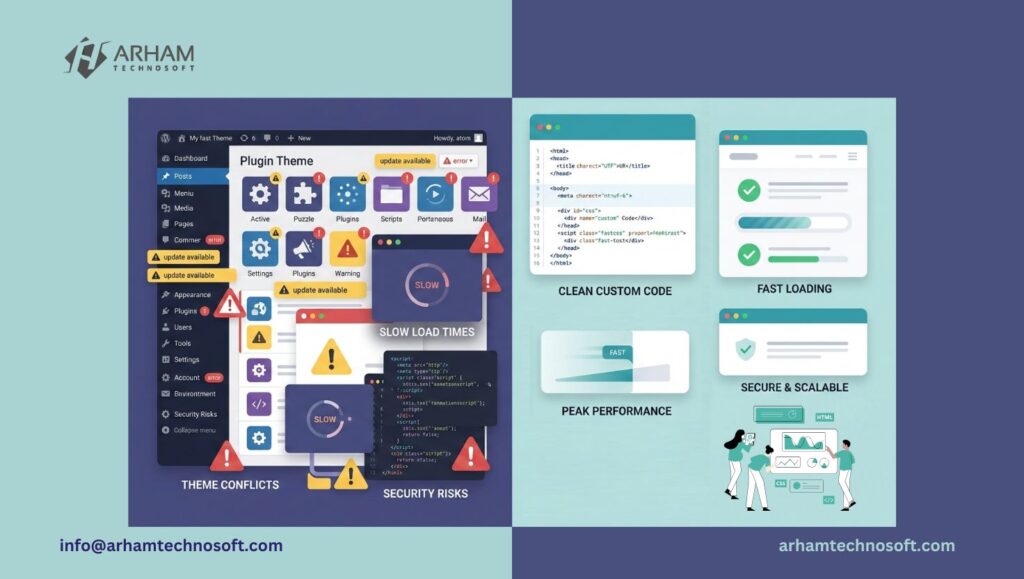
When someone plans to build a website, one of the first decisions they face is choosing between a premium theme and custom development. Premium themes look attractive at first. They promise quick setup, modern design, and a lower upfront cost. For many small websites, they work well in the beginning.
However, many growing brands later discover that these themes come with hidden problems. As businesses expand and their websites handle more traffic, the limitations of ready made themes begin to show.
That is why many top brands eventually move toward custom development. It gives them better control, stronger performance, and a website that truly supports their business goals.
Let us look at why this shift is happening and what hidden costs often come with premium themes.
The Quick Appeal of Premium Themes
Premium themes are popular because they make website creation simple. Instead of building a website from scratch, businesses can install a theme and launch their site quickly.
Most themes come with ready made layouts, page builders, and design options. A business owner with little technical knowledge can create a professional looking site within days.
The cost also looks reasonable at first. A premium theme may cost anywhere from fifty to a few hundred dollars. Compared to custom development, which may cost thousands, the theme seems like a smart choice.
But this first impression often hides deeper issues that appear later.
Performance Problems Start to Appear
Premium themes are design to serve thousands of different users. Because of that, they include many features that most websites never use.
These extra features add unnecessary code, scripts, and files to the website. As a result, the site becomes heavier and slower.
A slow website affects many things. Visitors may leave before the page loads. Search engines may rank the site lower. Even simple actions like opening a product page or submitting a form can feel sluggish.
Many businesses try to fix this by adding performance plugins or hiring developers to remove extra code. But these fixes only solve part of the problem. The core issue often remains inside the theme itself.
Custom development avoids this issue because every part of the site is built only for the features that are actually needed.
Design Limitations Become Clear
At first, premium themes appear flexible. They offer many layout choices and design settings. But once a brand wants something unique, the limits begin to appear.
Changing a simple design element may require editing complex theme files. Sometimes the change is not even possible without breaking other parts of the layout.
Brands that care about strong identity often struggle with this. They want their website to reflect their personality, values, and style. If the theme restricts design freedom, the website starts looking like hundreds of other sites using the same template.
Custom development solves this problem by starting with a blank canvas. Designers and developers can build layouts that match the brand exactly.
Compatibility Issues With Plugins
Many websites rely on plugins for extra functionality. These plugins may handle tasks like contact forms, search filters, booking systems, or online stores.
Premium themes sometimes include built in features that conflict with these plugins. When updates happen, compatibility issues may appear.
For example, a theme update may break a plugin feature. Or a plugin update may affect the layout of certain pages.
Business owners often find themselves stuck between updating the theme or keeping the site stable.
This cycle of updates, fixes, and testing consumes time and money. Custom development reduces these risks because the website is built around the exact tools the business plans to use.
Security Risks Increase Over Time
Another hidden cost of premium themes is security risk.
Popular themes are installed on thousands of websites. This popularity makes them a common target for hackers. If a vulnerability is discovered, many sites can be affected at once.
Even when developers release security updates, not every website owner installs them immediately. Some updates may also break existing customizations.
A custom built website usually has a smaller attack surface. Since the code is written specifically for the business, it is harder for automated attacks to exploit common weaknesses.
Security is especially important for businesses that handle customer data, payments, or private information.
Maintenance Becomes More Complicated
Running a website is not a one time task. It requires regular updates, bug fixes, and improvements.
With premium themes, maintenance often becomes complicated because several components must work together. These may include the theme itself, multiple plugins, page builders, and other tools.
If one component changes, it may affect the others. Troubleshooting these issues can take hours or even days.
Many businesses end up hiring developers just to keep the site running smoothly. Over time, these maintenance costs can exceed the price of building a custom site from the start.
Custom development creates a cleaner structure. Since the codebase is simpler and tailor to the website, maintenance becomes easier and more predictable.
Limited Scalability for Growing Businesses
A website that works for a small company may not work well for a growing brand.
As traffic increases and new features are added, the limitations of premium themes become more visible. The site may struggle to handle large product catalogs, advanced search filters, or complex user interactions.
Some themes also rely heavily on visual page builders. While these builders are convenient, they often produce heavy code that slows down large websites.
When a brand reaches this stage, it usually faces two choices. It can continue patching the existing system or rebuild the website with custom development.
Many companies choose the second option because it supports long term growth.
Custom Development Focuses on Business Goals
The biggest advantage of custom development is alignment with business goals.
Instead of adjusting the business to fit the theme, the website is designed around how the business actually works.
Developers can create workflows that match the company’s process. Designers can build user journeys that guide visitors toward key actions such as making a purchase or contacting the team.
Every feature exists for a reason. Nothing is added simply because the theme includes it.
This focused approach often results in faster performance, better user experience, and higher conversion rates.
The Long Term Cost Difference
Many businesses initially choose premium themes to save money. While the starting cost is lower, the long term expenses can grow.
These expenses may include performance optimization, troubleshooting plugin conflicts, fixing design limitations, and hiring developers for ongoing maintenance.
Eventually the total cost may exceed what custom development would have required in the first place.
Custom development requires a larger investment at the beginning. But it often reduces future problems and provides a stronger foundation for growth.
For brands that rely heavily on their website, this investment can make a significant difference.
When Premium Themes Still Make Sense
Despite these challenges, premium themes are not always a bad choice.
They work well for personal blogs, small businesses, and websites with simple needs. If a site does not require advanced features or heavy traffic handling, a well chosen theme can serve its purpose.
The key is understanding the limits. Premium themes are tools designed for convenience. They are not always the best long term solution for growing brands.
Final Thoughts
Websites have become one of the most important assets for modern businesses. They represent the brand, attract customers, and support everyday operations.
Platforms like Shopify and WordPress have made it easier than ever to launch a website using premium themes. These themes offer a fast and affordable way to get online and start building a presence.
However, as businesses grow, the limitations of theme-based websites can start to appear. Performance issues, design restrictions, plugin conflicts, security risks, and ongoing maintenance can slowly reduce the long-term value of the initial investment.
This is why many growing brands eventually move toward custom development on platforms like Shopify or WordPress. A custom-built website provides greater flexibility, better performance, improved security, and a structure that aligns more closely with business goals.
For companies focused on long-term growth, choosing the right foundation whether that’s a scalable custom Shopify store or a tailored WordPress website can save significant time, cost, and technical challenges in the future.